
The Cash Flow Statement is an analysis of sources of cash that flowed into and out of the business for the accounting period. The information is grouped by functional departments, because Cash can be freed up from anywhere (such as getting customers to pay faster, or paying suppliers more slowly), not just from Sales or the Finance Department.
Cash Flow Statement Equation:
Cash Flow from Operations + Cash Flow from Investing + Cash Flow from Financing = Net Change in Cash
|
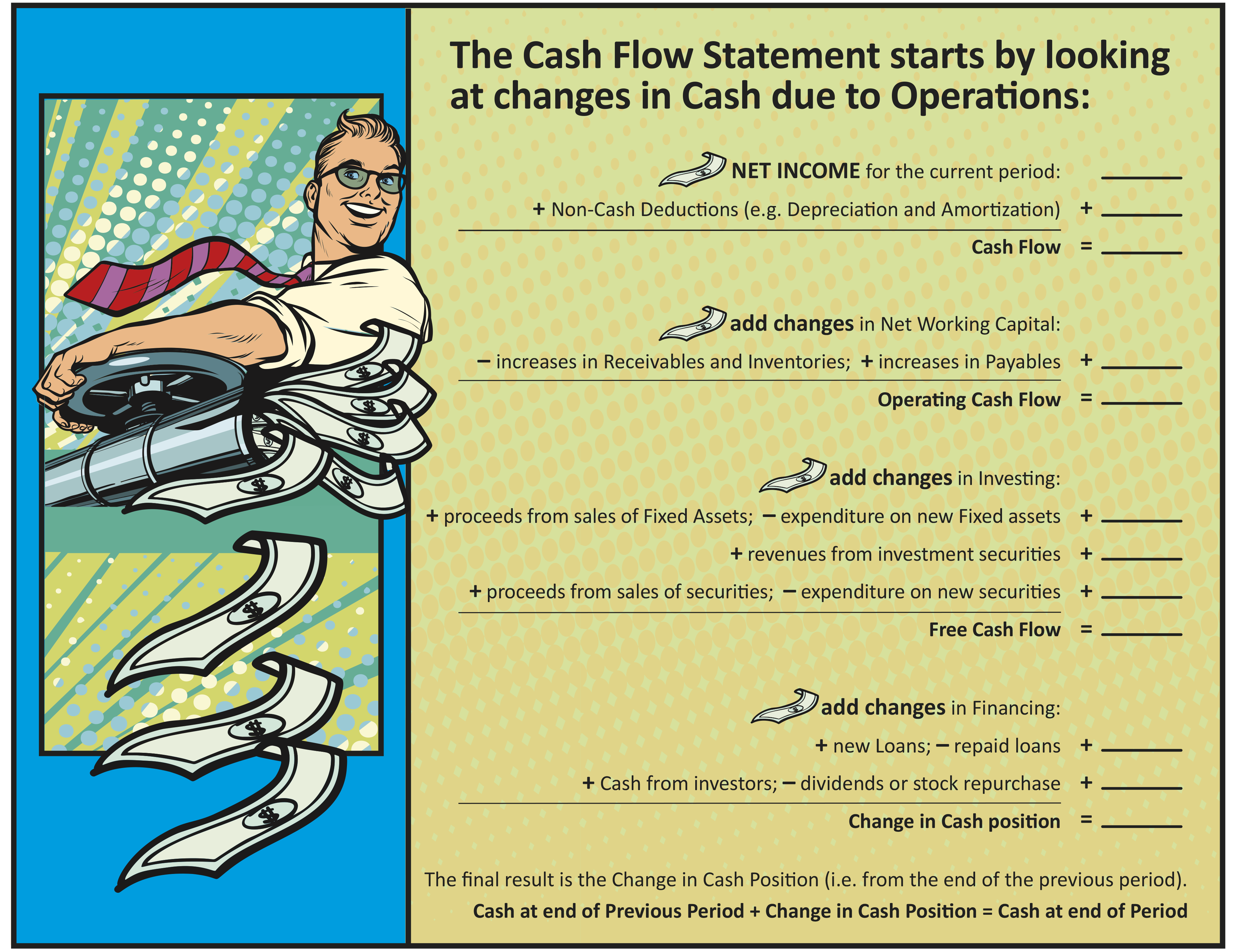
The Cash Flow Statement starts by looking at changes in Cash due to Operations; Net Income for the current period + Non-Cash Deductions (e.g. Depreciation and Amortization) = Cash Flow add changes in Net Working Capital; - increases in Receivables and Inventories; + increases in Payables = Operating Cash Flow add changes in Investing; + proceeds from sale of Fixed Assets; - expenditure for new Fixed Assets + revenues from investment securities + proceeds from sales of securities; - expenditure on new securities = Free Cash Flow add changes in Financing; + new Loans; - repaid loans + Cash from investors; - dividends or stock repurchase = Change in Cash position The final result is the Change in Cash (i.e. from the end of the previous period). Cash at end of Period = Cash at end of Previous Period + Change in Cash Position |
Also known as the Statement of Cash Flows.


 term list.